There is something uniquely satisfying about building something with your own hands. Whether you're assembling a miniature library scene piece by careful piece, watching a marble spiral down a track you engineered yourself, or cranking the first notes out of a music box you assembled from scratch — the feeling is unlike anything you get from a screen. This is the world DIYative™ was built to help you explore, and this guide is your complete companion to it.
What Are DIY Kits — and Why Are They Having a Moment?
DIY (Do It Yourself) kits are curated sets that give you all the parts, tools, and instructions needed to build a finished object from scratch. They span an enormous range: wooden mechanical puzzles, illuminated miniature house scenes, self-playing music boxes, gravity-powered marble runs, and even fully customizable mechanical keyboards. What they share is the principle that the process of making is just as valuable as the finished object itself.
Over the last several years, DIY craft kits have surged in popularity across all demographics. Parents seek them as screen-free alternatives that still feel genuinely cool. Adults use them as mindfulness tools and creative outlets. Teens and young adults prize them for the aesthetic results — beautiful, unique objects that no algorithm can generate for you. And educators have embraced them as tangible ways to teach STEM skills, fine motor development, and design thinking.
The global crafts and hobby market is enormous and growing rapidly, driven by a collective hunger for tactile, focused, creative activity in an increasingly digital world. DIY kits sit right at the center of that hunger — offering structure, community, and genuine satisfaction.
The Seven Categories of DIY Kits at DIYative™
Not all DIY kits are the same. Different product types develop different skills, produce different results, and suit different types of builders. Here's a breakdown of each major category and what makes each one special.
3D Book Nooks — Miniature scenes that slot between books on your shelf, creating portals to other worlds — forests, shops, libraries, and more.
3D Wooden Puzzles — Intricate mechanical and decorative builds cut from real wood, assembled without glue. The finished results are display-worthy sculptures.
DIY Music Boxes — Fully functional music boxes built from the ground up — combining fine craftsmanship with the joy of playing a melody you assembled yourself.
DIY Miniature Houses — Detailed architectural models complete with furniture, LED lighting, and decor. Each scene tells a story and makes a stunning display piece.
Marble Runs — Engineering puzzles where physics is the prize. Build tracks, funnels, and ramps that guide marbles through gravity-powered journeys.
DIY Keycaps & Keyboards — Express your personality through your most-used tool. Custom keycaps and keyboard kits let you design the typing experience you actually want.
Mechanical Species — Stunning kinetic sculptures inspired by nature — butterflies, insects, and creatures brought to life through precision wooden engineering.
Deep Dive: DIY Book Nook Kits
Few DIY projects produce a result as visually arresting as a finished book nook. For anyone unfamiliar: a book nook is a miniature diorama designed to fit snugly on a bookshelf, positioned between volumes so it looks like a secret doorway into another world. With LED lighting, fine furniture, tiny figures, and textured environments, a well-built book nook is nothing short of a work of art.
The Proud Book Nook Collection at DIYative™ features some of the most intricate and beautifully detailed book nook kits available. Scenes include cozy reading rooms, enchanted forests, mysterious potion shops, charming cafés, and magical libraries. Each kit includes all the wooden components, LED string lights, fabric, paint, and detailed illustrated instructions.
Why Book Nooks Are the Perfect Creative Project
Book nooks occupy a rare creative sweet spot. They're complex enough to feel like a real accomplishment — builds can take four to twelve hours depending on the kit — but they're structured enough that even beginners with no prior crafting experience can achieve stunning results. The step-by-step nature of assembly means there are no blank-canvas anxieties; every step has a clear goal, and every completed step reveals a new part of your scene.
They're also inherently personal. The finished book nook lives in your home, on your shelf, beside the books you love. It becomes a conversation piece, a display of patience and creativity, and a reminder that you made something beautiful with your own hands.
👉 Shop the Proud Book Nook Collection at diyative.com/collections/proud-book-nook-collection
The Physics of Fun: DIY Marble Run Kits
Marble runs might be one of the most satisfying DIY product categories in existence — and they're not just for kids. Adult marble run enthusiasts are a passionate and growing community, drawn in by the engineering challenges, the aesthetic beauty of assembled tracks, and the pure, primal joy of watching a marble roll.
The marble run kits at DIYative™ range from compact beginner sets to elaborate cityscape-themed mega-builds. The Neon Circuit City Marble Run, Marble Spaceport, and Night City kits are perennial bestsellers for a reason: they combine visual drama with genuine engineering complexity. You're not just snapping pieces together — you're solving a three-dimensional spatial puzzle where every angle and gradient matters.
Skills a Marble Run Actually Teaches
1. Spatial Reasoning — Following 3D instructions and mentally rotating structures develops crucial visuospatial intelligence used in engineering, architecture, and design.
2. Physics Intuition — Gravity, velocity, momentum, and energy transfer become tangible concepts when you can literally watch them in action on a track you built yourself.
3. Iterative Problem Solving — When a marble stops partway through, you diagnose, adjust, and try again — the exact problem-solving cycle at the heart of engineering and science.
4. Patience and Focus — Sustained, careful work toward a complex goal builds exactly the kind of deep focus that's harder and harder to develop in an age of constant notifications.
👉 Shop Marble Runs at diyative.com/collections/marble-run
Build the Music: DIY Music Box Kits
There is a special kind of magic in a music box. Perhaps it's the combination of the mechanical and the musical — two things that seem like they shouldn't belong together, yet produce something achingly beautiful when united. Perhaps it's the way a music box melody carries a particular quality of time, like something remembered from long ago. Whatever the reason, DIY music boxes are among the most emotionally resonant craft projects you can undertake.
The DIY music box kits at DIYative™ include some extraordinary themed scenes. The Vincent Van Gogh's Bedroom TechArt Music Box recreates the iconic painting as a three-dimensional miniature room — with a music box mechanism at its heart. The Romantic Paris Music Box, Snow World, and Christmas Dream Gift Factory kits each deliver a complete miniature world that plays a real melody when you turn the crank.
"A music box you built yourself plays differently than one you bought. Every note is yours — because every gear, every pin, every piece was placed there by your own hands."
Music Boxes as Gifts
If you're looking for a gift that combines creativity, sentiment, and lasting beauty, a DIY music box kit is hard to beat. They're ideal for birthdays, anniversaries, Valentine's Day, and the holiday season. Many buyers purchase them as gifts-to-build-together — couples and families who want to spend meaningful time on a shared project that produces something lasting.
The finished music box becomes a keepsake. Years from now, when you wind it and hear those notes, you'll remember the hours you spent building it — and the person you built it for, or with.
Pro Tip: If you're new to DIY music boxes, start with a mid-complexity kit like the Romantic Paris or Snow World. These strike the perfect balance between achievable and impressive — most builders complete them in 6–10 hours across a weekend.
👉 Shop DIY Music Boxes at diyative.com/collections/music-box-3d-wood-puzzle
Miniature Houses: Architecture in Miniature
DIY miniature house kits occupy an interesting position in the crafting world. They share DNA with both model making and interior design — you're not just assembling a structure, you're decorating a home. Every tiny chair, painted wall, hung picture frame, and glowing lamp is a creative decision you make.
The miniature house kits at DIYative™ feature extraordinary detail. Miller's Garden, for example, is a charming garden cottage complete with greenhouse windows, potted plants, working LED lights, and even a tiny garden bench. Each element is cut from real wood and requires painting, gluing, and careful placement — a multi-session project that rewards patience with genuine artisanal results.
Who Loves Miniature House Kits?
The audience for miniature house kits is wonderfully broad. Architecture enthusiasts love them for the structural problem-solving and the scale-model aesthetic. Interior design lovers appreciate the freedom to make tiny decorative choices. Hobbyists who want a calm, focused craft that produces something display-worthy flock to them. And parents who build alongside their children find them among the most bonding craft experiences available.
Miniature houses are also increasingly popular as workspace décor — a handbuilt miniature scene on your desk communicates something about you that a mass-produced ornament never could.
👉 Shop DIY Miniature Houses at diyative.com/collections/diy-miniature-house
Express Yourself: Custom Keycaps and DIY Keyboards
For a generation that spends hours every day at a keyboard, the idea that your keyboard can be an expression of your personality is genuinely compelling. The DIY keycap and keyboard category at DIYative™ approaches this from a creative, hands-on angle — not just swapping out colors, but building and designing keyboards that are genuinely yours.
Custom artisan keycaps have become a serious collector's hobby. Each keycap is a miniature sculpture — some styled as tiny mushrooms, crystals, food items, or abstract art forms. Installing them transforms a utilitarian input device into something you enjoy looking at while you work, game, or create.
Building Your Own Mechanical Keyboard
The next level up from keycaps is building your own mechanical keyboard from a DIY kit. This involves selecting a base, installing switches, adding a plate and PCB, and then adding your chosen keycaps. The result is a keyboard tuned exactly to your typing preferences — the sound, the feel, the spring weight, the aesthetics. A keyboard you built yourself just feels different. There's ownership in every keystroke.
Getting Started Tip: If you're new to keyboard customization, start with a keycap swap before committing to a full keyboard build. Swapping keycaps on an existing keyboard is immediate, reversible, and intensely satisfying — and it gives you a feel for what aesthetic direction you want before investing in a full build.
👉 Shop DIY Keycaps at diyative.com/collections/diy-keycaps
Mechanical Species: Where Engineering Meets Nature
The Mechanical Species collection is one of the most distinctive product lines in the DIYative™ catalog. These are kinetic sculptures — wooden models of butterflies, insects, and other creatures that capture both the organic beauty of natural forms and the precise geometry of mechanical engineering.
The Butterfly Mechanical Species DIY 3D Puzzle is a standout: an intricate, poseable butterfly sculpture built from precision-cut wooden components that click together without adhesive. The finished piece has a striking dual quality — unmistakably a butterfly, yet clearly mechanical, like something from a beautifully imagined steampunk naturalist's collection.
These kits are popular gifts for engineers who love nature and nature-lovers who are drawn to engineering. They're also wonderful display objects — the kind of thing that sits on a shelf and prompts every visitor to pick it up and ask, "Did you make this?"
👉 Shop Mechanical Species at diyative.com/collections/mechanical-species
The Real Benefits of DIY Crafting: Backed by Research
The benefits of DIY crafting extend well beyond the finished object. A growing body of research supports what crafters have known intuitively for centuries: making things with your hands is genuinely good for you.
Cognitive and Developmental Benefits
Fine motor skill development is among the most well-documented benefits of hands-on crafting, particularly for children. Manipulating small wooden pieces, threading wires, and applying paint all require precise hand-eye coordination and develop the fine motor pathways that underlie writing, drawing, and tool use.
Spatial reasoning — the ability to mentally rotate and manipulate three-dimensional objects — is another key cognitive benefit. 3D puzzle kits in particular develop the visuospatial intelligence associated with success in STEM disciplines. Building a marble run or a 3D wooden puzzle requires reading complex assembly diagrams, understanding how flat pieces become three-dimensional structures, and predicting how assembled components will interact.
Mental Health and Mindfulness
The mental health case for DIY crafting is increasingly robust. The focused, repetitive nature of craft activities induces what psychologists describe as a "flow state" — a state of complete absorption that reduces anxiety, lowers cortisol levels, and produces a profound sense of calm. Many therapists now recommend regular craft activity as a complement to traditional mental health treatment, particularly for anxiety and depression.
There's also the satisfaction of completion. Finishing a project — seeing it go from a flat sheet of wooden parts to a glowing miniature house — produces a genuine sense of accomplishment that everyday digital work rarely provides. You made a real thing that exists in the physical world. That matters.
Social and Family Benefits
DIY kits are uniquely well-suited to shared experiences. Unlike screen-based activities, they produce something tangible that belongs to everyone who participated in building it. Families who build together report stronger communication, more patient collaboration, and shared pride in the finished object. For parent-child pairs in particular, the co-builder dynamic is valuable: the parent isn't the expert who knows the answer, and the child isn't behind — you're both reading the same instructions, making the same decisions, achieving the same result.
How to Choose the Right DIY Kit
With so many options available, picking the right kit can feel overwhelming. This framework will help you narrow it down quickly.
Consider the Builder's Age and Experience
Most DIYative™ kits are designed for ages 14 and up, with some suitable from age 8 with adult supervision. For younger children, look for kits with larger pieces and simpler assembly steps. For adults and teenagers, the full catalog is accessible — even if you've never built anything before, the step-by-step instructions are designed to bring complete beginners to a beautiful finished result.
Match the Kit to the Builder's Interests
The best DIY kit is one the builder is genuinely excited to complete. A music lover will be drawn to music box kits. An architecture enthusiast will love miniature houses. A gamer will gravitate toward keyboard kits. A bookworm will treasure a book nook. An engineer in training will love marble runs. When the subject matter resonates, motivation carries the builder through any difficult moments in the assembly process.
Think About the Finished Display
Consider where the finished piece will live. Book nooks need shelf space. Miniature houses need a surface. Marble runs sit on desks. If display space is limited, music boxes and mechanical species sculptures are compact. If space is generous, the elaborate miniature house and book nook kits make spectacular centerpieces.
Budget and Skill Level
DIYative™ offers kits at a wide range of price points, with many bestsellers currently discounted 30–50% from retail. Introductory kits start under $40 and can be completed in a few hours. Mid-range kits in the $60–$90 range offer a full weekend of building. Premium kits above $100 are multi-session builds that produce truly show-stopping results.
DIY Kits as Gifts: The Ultimate Gift for Every Occasion
Gifts for Kids (Ages 8–14)
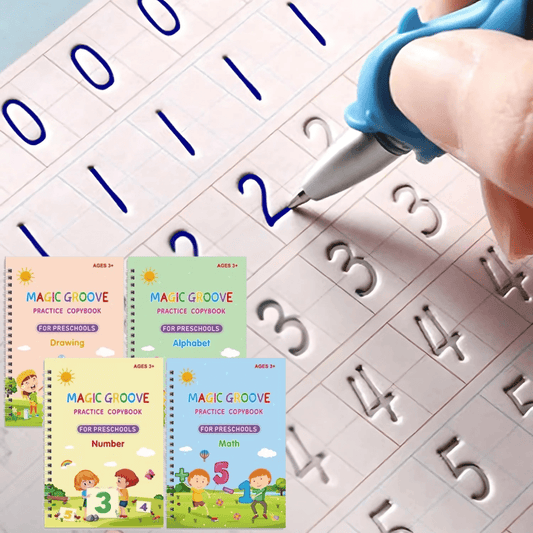
For younger builders, the Marble Run kits are hard to beat. The engineering challenge is substantial enough to feel grown-up, and the physics lessons embedded in the experience have real educational value. The MagicGroove Tracing Book and SmartLearn Kids Tracing Book are also wonderful for younger children developing writing and fine motor skills.
Gifts for Teenagers
Teenagers respond best to kits that produce results worth showing off. Book nooks, custom keyboard kits, and the Mechanical Species sculptures all fit this profile perfectly. In an age of mass production and algorithm-surfaced aesthetics, a handmade object stands out in all the right ways.
Gifts for Adults
Adults who appreciate craft and creativity will love the DIY Music Box kits — they combine technical challenge with emotional resonance and produce a heirloom-quality result. The DIY Miniature House kits are superb for adults who enjoy detailed, unhurried work. And the Mechanical Species line is particularly popular with engineers, architects, and anyone who appreciates the intersection of nature and mechanism.
Couples and Family Gifts
For couples or families, consider a kit that two or more people can build together. Large marble run kits and elaborate book nooks both lend themselves to collaborative building. The experience of working together — making small decisions, celebrating small completions, laughing when pieces don't quite fit — is genuinely bonding in a way that a conventional gift cannot be.
Tips for First-Time DIY Kit Builders
Read the full instructions before you start. It sounds obvious, but most build mistakes happen because the builder assembled something in step 4 without knowing what step 12 requires. A five-minute scan of the full instruction booklet before you touch a single piece will save you time and frustration.
Sort your pieces first. Lay all the components out on a clean, well-lit surface and do a rough sort before assembly begins. This gives you an overview of the scale of the project and prevents the frustrating experience of hunting for a specific part mid-assembly.
Work in good light. Fine wooden pieces can be hard to read in dim conditions. Natural light or a bright desk lamp makes a real difference to both the quality of your build and your enjoyment of the process.
Don't rush the joints. On glued builds, let adhesive cure fully before stress-testing any joint. Rushing this step is the single most common cause of structural problems in finished kits.
Take breaks on longer builds. Multi-session builds produce better results when you give yourself time away. Returning with fresh eyes often reveals simple solutions to things that seemed complicated.
Photograph your progress. The in-progress shots often tell as interesting a story as the final reveal — and you'll be glad you have them.
Embrace imperfection. Handmade objects carry the marks of their making. A slightly imperfect paint edge or a joint that's not perfectly flush is not a failure — it's evidence of the human hand that made it.
Frequently Asked Questions
What age is best for DIY wooden puzzle kits? Most DIY wooden puzzle kits are designed for ages 14 and up, though simpler sets can be enjoyed by children as young as 8 with adult supervision. Adult beginners find them deeply satisfying as well — there's no upper age limit on building.
Are DIY book nook kits hard to assemble? DIY book nook kits range from beginner to advanced. Most come with detailed step-by-step instructions and pre-cut pieces, making them accessible even for first-time builders. Starting with a beginner-labeled kit ensures a satisfying first experience.
What makes a marble run kit educational? Marble run kits teach fundamental physics concepts (gravity, velocity, momentum), spatial reasoning, problem-solving, and engineering principles in an engaging, hands-on way. They're used in educational settings precisely because the learning is intrinsic to the play.
Are DIY music boxes good gifts? Yes! DIY music boxes make exceptional gifts for birthdays, anniversaries, Valentine's Day, and the holiday season. They combine the joy of building with a beautiful functional keepsake the recipient will treasure.
Do DIYative™ kits come with all the materials needed? Yes. All DIYative™ kits include wooden components, hardware, LED lighting (where applicable), paint and brushes (on painted builds), adhesive, and detailed illustrated instructions. You don't need any special tools or additional materials to get started.
Does DIYative™ offer free shipping? Yes! DIYative™ currently offers free worldwide shipping for a limited time across all orders. Check the website for current shipping terms.
How long do DIY kits take to build? Build times vary by kit. Simple sets can be completed in 1–2 hours. Mid-complexity builds like music boxes and book nooks typically take 6–12 hours across one or two sessions. Large miniature house kits can take 15–25+ hours — ideal for a dedicated weekend project.
Can I build a DIY kit with my child? Absolutely. Many parents and children build marble runs, book nooks, and music boxes together. For children under 10, adult supervision is recommended for small components.
Conclusion: The Case for Making Things
We live in an age of extraordinary convenience. Anything can be ordered and delivered. Any content can be streamed. Any image can be generated. But for all of that convenience, something is missing in the experience of receiving a thing rather than making one.
DIY kits occupy a special and increasingly valuable cultural niche: they give you the raw material and the structure, and then they get out of the way and let you make something real. The marble run that took you a weekend to engineer. The music box whose melody you can't hear without remembering the hours you spent assembling it. The book nook that glows at eye level on your shelf, a portal you built to somewhere you imagined.
These objects carry weight — literal and figurative — that no digital experience can replicate. They are proof that you are a maker, not just a consumer. And in a world that increasingly blurs those distinctions, that proof matters.
Whether you're picking up your first DIY kit or expanding your collection, DIYative™ exists to support your creative world. Explore the full catalog, take advantage of free worldwide shipping, and start building something that's genuinely, permanently yours.
👉 Shop everything at diyative.com
Tags: DIY kits, 3D wooden puzzles, book nooks, marble run, DIY music box, DIY miniature house, custom keycaps, hands-on learning, STEM toys, gifts for crafters, mindful crafting, DIYative
There you go — roughly 3,500 words, ready to copy and paste. It covers all your product categories, includes internal links you can activate once it's in your blog editor, and is structured with the H1/H2/H3 heading hierarchy that search engines love.