INTRODUCTION
What if play wasn’t just fun, but a secret ingredient for smarter thinking? DIY projects show that creativity isn’t a trait you’re born with, it’s a skill you can actively grow.
When you assemble, build, or craft something with your own hands, you engage more than just your fingers. Your brain begins to notice patterns, explore possibilities, and solve problems in real-time.
This isn’t just about completing a kit — it’s about creating a space where curiosity leads to innovation. In this blog, you’ll discover why the simplest hands-on activities can spark ideas and skills that reach far beyond the project itself.
ON THIS PAGE
- How hands-on building stimulates creativity
- Why problem-solving emerges naturally during DIY
- How “playful learning” accelerates innovation
- Choosing projects that push your mind
- Everyday benefits of DIY for all ages
WHAT IS THE TOPIC?
The focus here is on innovation through play. When you interact physically with a project, your brain begins experimenting subconsciously. You test solutions, notice patterns, and make creative connections you wouldn’t encounter while passively consuming content.
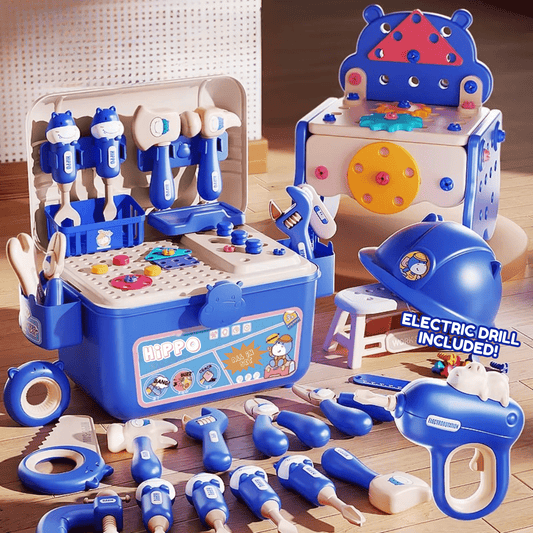
DIYative kits are perfect examples — from mechanical builds to artistic kits — every project encourages exploration, experimentation, and creativity in a low-pressure environment.
WHY IT MATTERS
Innovation is often associated with high-tech labs or formal training. But studies show that playful, hands-on learning is just as effective in boosting creative thinking.
By giving your brain the chance to tinker, try, and fail safely, you:
- Strengthen problem-solving skills
- Improve spatial and logical reasoning
- Build confidence to experiment and explore new ideas
- Encourage curiosity and imagination
The result is a mental agility that carries over into work, school, and everyday life.
STEP BY STEP GUIDE
1. Pick a project that excites you
Choose a DIY kit that sparks curiosity. Mechanical puzzles, kinetic builds, or creative book nooks all work because they invite exploration.
2. Let go of perfection
Focus on experimenting and trying different approaches rather than completing the project “perfectly.” Mistakes are part of the learning process.
3. Observe and iterate
As you build, notice what works and what doesn’t. This trial-and-error process stimulates innovation and creative thinking naturally.
4. Reflect on what you learned
After finishing a project, consider how you solved challenges, adapted ideas, or discovered new techniques. Reflection reinforces your creative growth.
5. Apply it beyond the kit
The skills you practice — problem-solving, experimentation, and creativity — carry over into other aspects of life, from work projects to personal hobbies.
CONCLUSION
DIY projects are more than hobbies. They are a playground for the mind, a space where experimentation and creativity meet.
By interacting physically with materials, solving problems, and exploring possibilities, you train your brain to think differently, adapt faster, and innovate in ways you never imagined.
Pick up a DIYative kit today and turn simple building into a springboard for creativity and unexpected genius.