INTRODUCTION
Before children can design buildings, create inventions, or understand complex structures, they first need to understand space.
How objects fit together.
How shapes connect.
How one change can affect an entire creation.
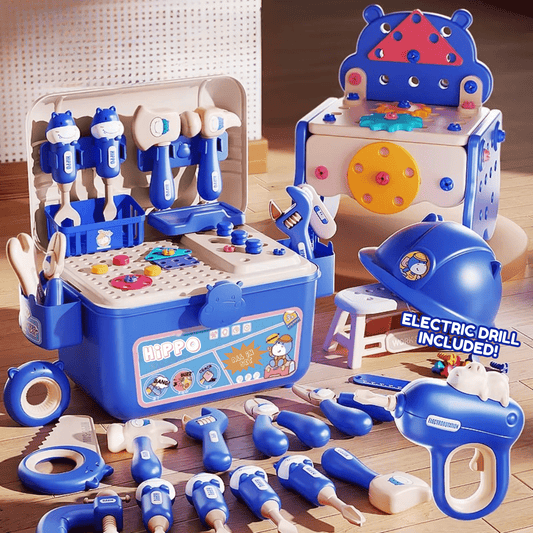
Building blocks provide a simple way for children to explore these ideas naturally.
A child does not see a pile of blocks as just pieces. They see possibilities. A tower becomes a castle. A few shapes become a vehicle. A collection of blocks becomes an entire world.
Through building, children begin developing the ability to think in three dimensions.
In this blog, we’ll explore how building blocks help children understand space, develop creative thinking, and build important skills through hands on discovery.
ON THIS PAGE
- What is 3D thinking and why does it matter?
- How building blocks develop spatial awareness
- Why creating structures improves problem solving
- The connection between imagination and engineering
- Encouraging better learning through block play
WHAT IS THE TOPIC?
3D thinking is the ability to understand how objects exist and interact in physical space.
It involves imagining:
Where pieces should go.
How different shapes connect.
What a structure might look like from different angles.
This skill is important in many areas, including design, engineering, architecture, mathematics, and everyday problem solving.
Building blocks naturally encourage this type of thinking because children must consider size, position, balance, and structure while creating.
Every block placed is a small design decision.
WHY IT MATTERS
Many activities focus on recognizing information from a screen or a page.
Building blocks provide something different.
They allow children to physically explore ideas.
Block play helps develop:
- Spatial awareness: Children learn how objects relate to each other in space.
- Planning skills: Larger structures require thinking ahead before building.
- Creative problem solving: Children discover different ways to achieve their ideas.
- Fine motor skills: Connecting and arranging pieces improves hand coordination.
- Confidence: Completing a structure creates a sense of achievement.
The best part is that children learn these skills while simply playing and creating.
STEP BY STEP GUIDE
1. Start with simple structures
Encourage children to begin with basic creations like towers, bridges, or simple shapes.
These projects help them understand how pieces connect.
2. Encourage building from different angles
Ask children to look at their creation from different sides.
What does it look like from the front?
What happens if you add something behind it?
This develops stronger spatial awareness.
3. Introduce building challenges
Small challenges can turn play into problem solving.
Try questions like:
Can you build a taller tower?
Can you create a bridge that holds weight?
Can you make the same structure another way?
4. Let children redesign their creations
Rebuilding is an important part of learning.
When children change their designs, they discover that there are many possible solutions.
5. Connect building with real world ideas
Help children notice how structures around them work.
Buildings, bridges, vehicles, and machines all begin with similar ideas of design and construction.
HOW BUILDING BLOCKS SUPPORT DIFFERENT LEARNING STYLES
For Creative Thinkers
Blocks allow children to turn imagination into something they can see and touch.
They can create without limits or a single correct answer.
For Problem Solvers
Building challenges encourage children to test ideas and find solutions.
A structure that falls becomes an opportunity to improve.
For Future Engineers
Construction play introduces early concepts of design, mechanics, and structure.
Children learn by experimenting with how things work.
CONCLUSION
Building blocks may look simple, but they introduce some of the biggest ideas in learning.
They teach children how to imagine, design, test, and improve.
Every structure they create is more than a pile of connected pieces.
It is practice in thinking creatively and understanding the world around them.
The next time a child builds a tower, a bridge, or an imaginary city, remember:
They are not just playing.
They are learning how to think in three dimensions.