Screens are everywhere. Work, school, entertainment, even relaxing usually involves another device. And while technology has its place, too much passive consumption leaves many of us feeling scattered, overstimulated, and oddly unfulfilled.
For families, it can feel even more complicated. You want learning to happen naturally. You want focus, curiosity, and independence. But you do not want to force rigid schedules or constant structure. And you definitely do not want learning to feel like a battle.
At the same time, adults are craving something similar. More creativity. More focus. More doing instead of scrolling. Whether you are a parent, a hobbyist, or simply someone trying to build better habits at home, hands on learning has become more relevant than ever.
In this guide, you will learn how to build a screen free learning routine that encourages creativity, strengthens focus, and supports real world skills without making it feel overwhelming or complicated.
WHAT IS THE TOPIC?
A screen free learning routine is a structured but flexible approach to learning that prioritizes physical interaction, problem solving, movement, and tactile engagement over passive digital consumption.
It does not mean eliminating technology entirely. Instead, it means intentionally balancing it with hands on activities that strengthen attention span, memory, fine motor skills, and creative thinking.
This type of routine works across ages. Younger children benefit from sensory exploration. Teens benefit from focus training and memory strengthening. Adults benefit from mental clarity and deeper concentration.
At its core, this topic is about learning by doing and engaging the brain through physical action rather than constant input.
WHY IT MATTERS
Attention spans are shrinking. Multitasking is increasing. And constant notifications have trained many of us to switch tasks every few seconds.
Hands on learning interrupts that cycle.
When someone physically moves a piece, traces a line, flips a card, or solves a tactile puzzle, the brain forms stronger neural connections than it does while passively watching a screen. Movement reinforces memory. Physical interaction builds problem solving skills. Sustained attention improves naturally because the task demands it.
Here is why this approach is so powerful today
It builds deep focus instead of surface attention.
It encourages patience and persistence.
It strengthens memory through repetition and interaction.
It reduces overstimulation and mental fatigue.
It promotes creativity by allowing space for exploration.
Most importantly, it makes learning feel active and engaging rather than forced or exhausting.
STEP BY STEP GUIDE
1. Start with One Dedicated Hands On Time Block
Before adding new tools or activities, decide when this routine will happen. Keep it realistic.
For many families and individuals, 20 to 30 minutes per day is enough to see benefits. The key is consistency, not length.
Choose a time when energy is stable. After breakfast. Before dinner. As a wind down activity in the evening.
Keep devices out of sight during this block. Even silent notifications can disrupt focus.
Once the time is set, the routine becomes predictable which reduces resistance.
2. Focus on Tactile Skill Building First
Early sessions should emphasize fine motor skills, coordination, and concentration.
Activities that involve sorting, guiding, tracing, and manipulating pieces activate multiple parts of the brain at once.
For example, a tool like the TinkerTots Montessori Magnetic Maze – 3 Smart Worlds of Hands On Learning supports color recognition, counting, and steady hand control in a calm, structured way. It encourages focus because it requires precision, and the physical feedback keeps engagement high.
Even older kids and adults benefit from similar tactile concentration exercises. The brain does not outgrow the need for hands on engagement.
3. Add Structured Repetition for Cognitive Growth
Once fine motor focus is established, introduce activities that reinforce memory and foundational learning through repetition.
Repetition does not need to be boring. It needs to be interactive.
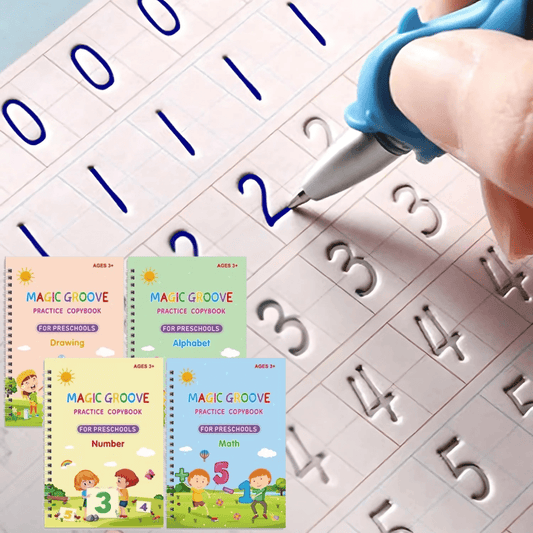
Tracing letters, numbers, and shapes helps build muscle memory and cognitive recognition at the same time. A resource like the SmartLearn Kids Tracing Book: Erasable Montessori Practice for Numbers, Letters & Shapes allows repeated practice without waste, which makes learning feel lighter and less pressured.
Because it is erasable, it encourages experimentation and correction without fear of mistakes which is an important part of creative learning at any age.
For teens and adults, journaling, sketching, or handwriting practice can serve a similar purpose.
4. Strengthen Memory Through Play Based Challenges
After building focus and repetition skills, add memory based challenges to keep the routine dynamic.
Memory games train attention, pattern recognition, and processing speed. They also introduce healthy competition and social interaction if done in groups.
A fast paced matching game like The Great Memory Flip Off! – Fast Paced Matching Game for All Ages turns memory training into an engaging activity that works across age groups. It keeps the brain alert while reinforcing recall skills.
The goal is not just to win. It is to stretch working memory in an enjoyable way.
5. Keep the Routine Flexible Not Rigid
Consistency matters. Perfection does not.
Rotate activities throughout the week
Day 1 fine motor focus
Day 2 tracing and structured practice
Day 3 memory and matching games
Day 4 free creative exploration
This variety prevents burnout while maintaining structure.
If a session feels shorter or lighter than planned, that is okay. The habit of showing up matters more than intensity.
6. Make It Visible and Celebrated
Display progress. Celebrate improvements. Keep completed tracing pages or track memory game improvements.
Visible growth reinforces motivation.
For adults, this might mean keeping a sketchbook or journaling notebook in sight. For families, it might mean a simple progress chart on the fridge.
Recognition strengthens consistency.
FREQUENTLY ASKED QUESTIONS
1. How long should a screen free learning routine last each day?
20 to 30 minutes is enough for most households. The key is regularity rather than duration.
2. Does this replace digital learning entirely?
No. It balances it. Technology can still be used, but hands on learning strengthens foundational skills that screens often overlook.
3. What age group benefits most from this?
All ages benefit. Younger children build motor skills and focus. Teens strengthen memory and concentration. Adults reduce mental fatigue and improve cognitive flexibility.
4. What if my child resists?
Start small. Choose one activity and keep it short. Resistance often decreases when sessions feel manageable and predictable.
5. Can adults participate too?
Absolutely. Memory games, handwriting practice, and tactile problem solving exercises benefit adult cognitive health just as much as children’s development.
6. How do I avoid turning it into school at home?
Keep the tone relaxed. No pressure. No grading. Treat it as creative time rather than mandatory study time.
If screens have started to dominate your daily rhythm, adding structured hands on learning can bring balance back into your home.
You do not need a complicated system. You do not need hours of preparation. You just need a consistent block of time, tactile activities that encourage focus, and a willingness to let learning happen through doing.
Creativity thrives when hands are involved. Focus strengthens when the body participates. Confidence grows when progress is visible.
Start small. Stay consistent. Let learning feel active again.
Because sometimes the simplest way to grow is to step away from the screen and start building with your hands.