Screens are everywhere. Work, school, entertainment, even social time often happen through a device—and while technology is useful, it can quietly drain focus, patience, and creativity.
Many people feel it: mental fatigue, restlessness, short attention spans, and the sense that learning has become passive instead of engaging. Even when there’s a desire to slow down and build skills, it’s hard to know where to start.
Hands-on learning offers a different experience. It brings attention back to the present moment, turns learning into something physical, and makes progress visible and satisfying.
The challenge isn’t motivation, it’s creating a routine that feels doable, enjoyable, and sustainable.
In this article, you’ll learn how to build hands-on learning habits that reduce screen reliance, support creativity, and fit naturally into everyday life.
WHAT IS THE TOPIC?
Hands-on learning is an approach that emphasizes active participation over passive consumption. Instead of watching, scrolling, or tapping, learners engage through movement, touch, repetition, and problem-solving.
This method applies to far more than early education. Adults, teens, hobbyists, and families all benefit from learning that involves the hands whether it’s building, tracing, sorting, assembling, or practicing physical skills.
At its core, hands-on learning transforms abstract ideas into concrete experiences. It slows the pace, strengthens focus, and makes learning feel more intuitive and human.
WHY IT MATTERS
Modern life trains the brain for speed and distraction. Notifications, quick videos, and endless content reward shallow attention but meaningful learning requires something different.
Hands-on learning matters because it:
-
Improves focus by engaging multiple senses at once
-
Encourages mindfulness through repetitive, tactile actions
-
Builds confidence as progress becomes visible and tangible
-
Supports learning by doing, not memorizing
-
Creates calm by reducing overstimulation
For families and individuals alike, hands-on activities offer a way to reconnect with skills, curiosity, and each other without pressure or performance.
STEP-BY-STEP GUIDE
1) Start with short, predictable learning moments
Explain first:
The biggest mistake is aiming for long sessions. Short, consistent moments work better. Ten to twenty minutes is enough to build focus without frustration.
Choose a regular time after breakfast, before dinner, or as a quiet evening activity. Predictability helps the brain settle into learning mode.
Natural product mention (1):
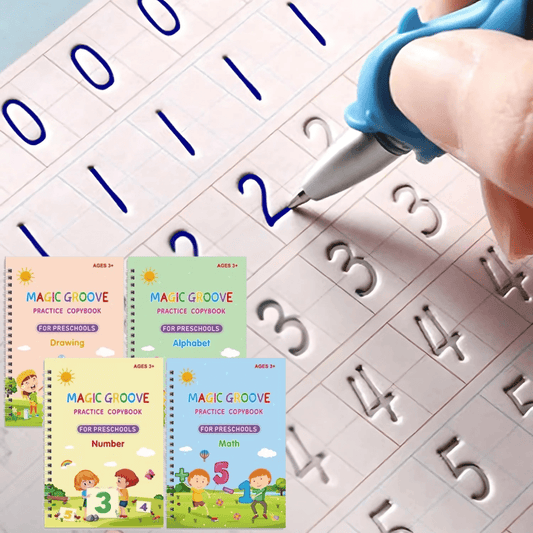
For routines focused on writing or fine motor skills, tools like the MagicGroove Tracing Book: Reusable Handwriting Practice with Disappearing Ink & Grooves fit naturally into short sessions. The tactile grooves and reusable format encourage steady practice without pressure to be perfect.
2) Focus on repetition, not speed
Explain first:
Hands-on learning works best when repetition is calming rather than rushed. Repeating movements, tracing, sorting, guiding builds muscle memory and confidence.
Avoid timers and performance goals. Let the process itself be the reward.
Natural product mention (2):
Structured tracing tools like the SmartLearn Kids Tracing Book: Erasable Montessori Practice for Numbers, Letters & Shapes support this idea well, allowing learners to repeat patterns, erase mistakes, and progress at their own pace.
3) Use tactile problem-solving to strengthen focus
Explain first:
Learning improves when the hands guide the brain. Activities that involve guiding objects, sorting, or navigating paths require sustained attention without feeling overwhelming.
This type of focus feels different from screen-based attention, it’s quieter and more grounding.
Natural product mention (3):
Hands-on tools like the TinkerTots Montessori Magnetic Maze – 3 Smart Worlds of Hands-On Learning offer tactile problem-solving that naturally builds concentration and coordination through guided movement.
4) Adapt activities to different ages and abilities
Explain first:
Hands-on learning is flexible. The same activity can be calming for one person and challenging for another depending on how it’s used.
For beginners, focus on exploration. For more experienced learners, add variations: patterns, challenges, or storytelling elements.
The goal isn’t mastery, it’s engagement.
5) End sessions with a clear stopping point
Explain first:
Stopping at a natural break rather than pushing to finish, makes it easier to return next time. Leave something slightly unfinished so curiosity carries forward.
Clean up together, talk briefly about what was enjoyable, and then move on. This reinforces learning as a positive experience, not an obligation.
FREQUENTLY ASKED QUESTIONS
1) How long should hands-on learning sessions be?
Most people benefit from 10–20 minutes at a time. Short sessions build consistency without mental fatigue.
2) Is hands-on learning only for kids?
Not at all. Adults, teens, and hobbyists benefit just as much especially for focus, stress reduction, and skill-building.
3) How does this help reduce screen fatigue?
Tactile activities engage the senses differently, giving the brain a break from constant visual stimulation and rapid switching.
4) What if someone gets frustrated easily?
Choose activities with low pressure and clear structure. Repetition and erasable or reusable formats help reduce fear of mistakes.
5) Can this replace screen-based learning?
It doesn’t need to replace it completely. Hands-on learning works best as a balance, offering depth and calm alongside digital tools.
Hands-on learning doesn’t require elaborate setups or long schedules. It starts with small, intentional moments where curiosity replaces distraction and learning becomes something you can feel, not just see.
By choosing tactile activities, keeping sessions short, and focusing on process over outcomes, you create space for creativity, focus, and meaningful growth.
If screens have been doing all the work lately, this is an invitation to try something different, one calm, hands-on moment at a time.